
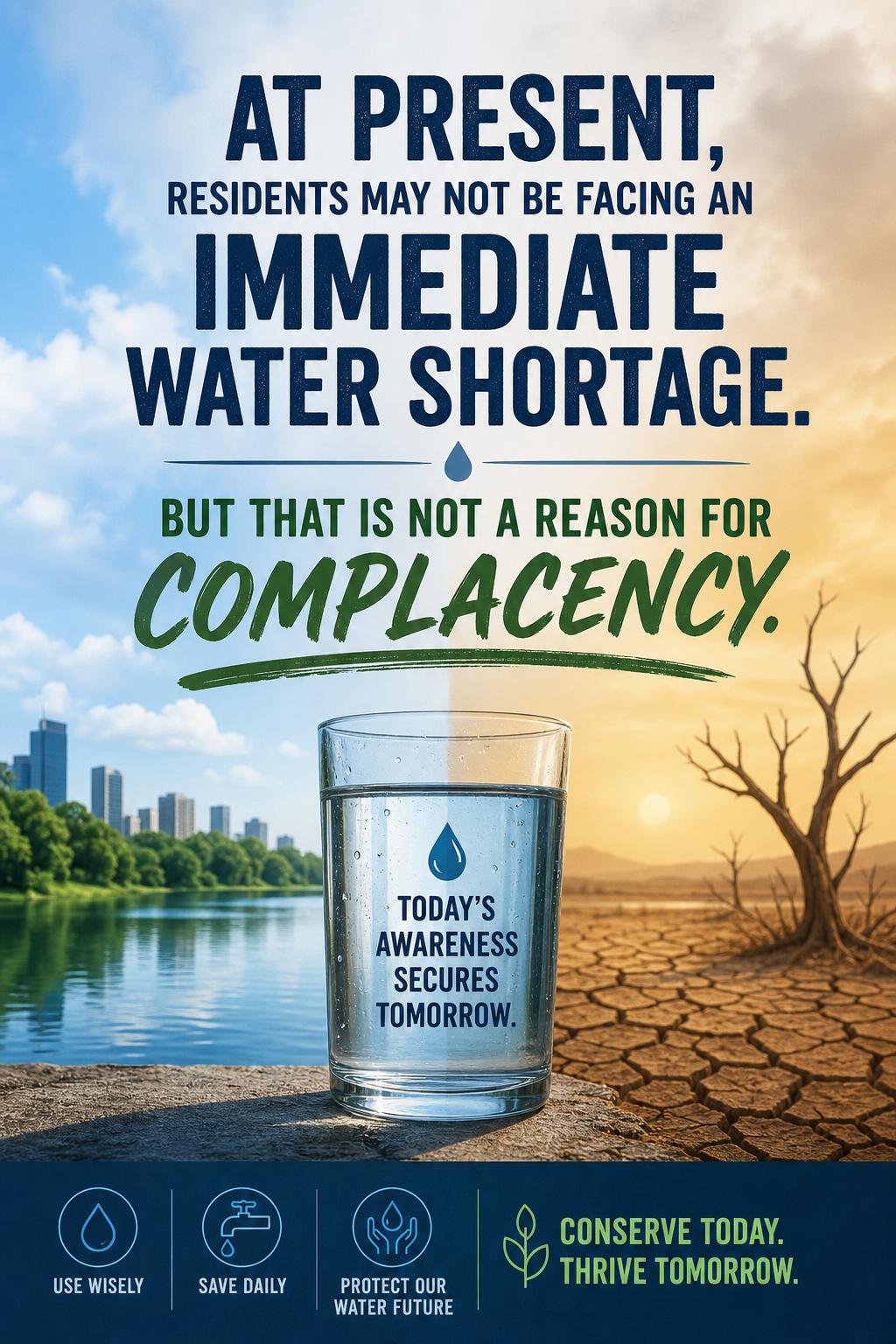
At present, residents may not be facing an immediate water shortage. But that is not a reason for complacency. In fact, it is the exact reason to ask the most important question now:
What is the future water plan for the society?
Because right now, the situation is worrying. The society is depending on only one submersible pump running, and that is not a sustainable long-term arrangement for a large residential community. A single point of failure in water supply is not a plan — it is a risk waiting to turn into a crisis.
One Pump Is Not Enough
Water is not a luxury in a residential society. It is the most basic necessity. Every household depends on it every single day for drinking, bathing, cleaning, cooking, and sanitation. When a society with so many families depends on only one functioning submersible pump, it creates a dangerous vulnerability.
What happens if that pump fails tomorrow? What happens if maintenance is delayed? What happens if demand increases in peak summer? What happens if the existing system cannot handle pressure in the future?
These are not imaginary questions. These are real concerns that responsible management must answer immediately.
Residents Need a Future Plan, Not Assurances
Residents do not want vague promises. They do not want to be told that “everything is fine for now.” That kind of thinking is exactly how communities end up in trouble later.
We need a clear, written, and practical future water plan that explains:
- How water demand will be managed in the coming years
- Whether backup pumps are being planned
- What the maintenance schedule is for the current pump
- How emergencies will be handled if the pump stops working
- Whether storage capacity is sufficient
- Whether additional infrastructure is required before summer or future expansion
A responsible society does not wait for a crisis to expose weak planning.
Dependency on One System Is a Serious Risk
The biggest mistake any residential community can make is putting all its reliance on one system and hoping it never fails. Mechanical systems break. Motors burn. Electrical faults happen. Groundwater levels change. Demand increases.
When that happens, residents are the ones who suffer.
Water shortage in a society does not just cause inconvenience — it creates tension, panic, complaints, and distrust. Families begin storing water unnecessarily. Daily life becomes difficult. Elderly residents and children are affected first. Hygiene and sanitation are compromised.
This is why planning must happen before the shortage begins, not after.
Future Water Planning Must Be Taken Seriously
The management must stop treating water supply as a routine issue. It is a critical infrastructure issue. If the society is growing, if the number of residents is increasing, or if summer demand rises, then the current setup may not be enough.
A serious future plan should include:
- Backup submersible pump installation
- Regular servicing and monitoring
- Emergency response planning
- Water storage assessment
- Load and demand forecasting
- A long-term sustainability strategy
If these steps are not being discussed now, then the society is already behind.
Residents Have Every Right to Demand Clarity
This is not about panic. It is about responsibility.
Residents have every right to ask management:
What is the backup plan? What happens if the current pump stops working? What is being done today to prevent water shortage tomorrow? Why is the society relying on only one operational submersible pump?
These are legitimate questions, and they deserve clear answers.
Silence is not a solution. Delay is not a solution. Hoping that “nothing will go wrong” is not a solution.
A Strong Society Plans Ahead
A well-managed society thinks ahead. It identifies risks early and takes action before residents face hardship. Water security must be treated with urgency, especially in a large residential complex.
The future should not be left to chance. If the society wants to avoid conflict, complaints, and disruption later, the management must act now.
Residents are not asking for luxury.
Residents are asking for assurance.
Residents want a plan, not excuses.
Conclusion: Act Before the Crisis Arrives
Today there may be no shortage. But tomorrow is uncertain, and one pump is not enough to guarantee stability for the future.
The society must come forward with a clear, transparent, and reliable water plan immediately. Because when water supply fails, the damage is already done.
Do not wait for a shortage to begin planning.
Do not wait for a breakdown to think about backup.
Prepare now, before residents are left struggling later.